

Osbourn, A. The Cinderella tree, Quillaja saponaria – A soap story. Plants People Planet. 2026 Mar, 8(2):439-451, PMID: 41743997
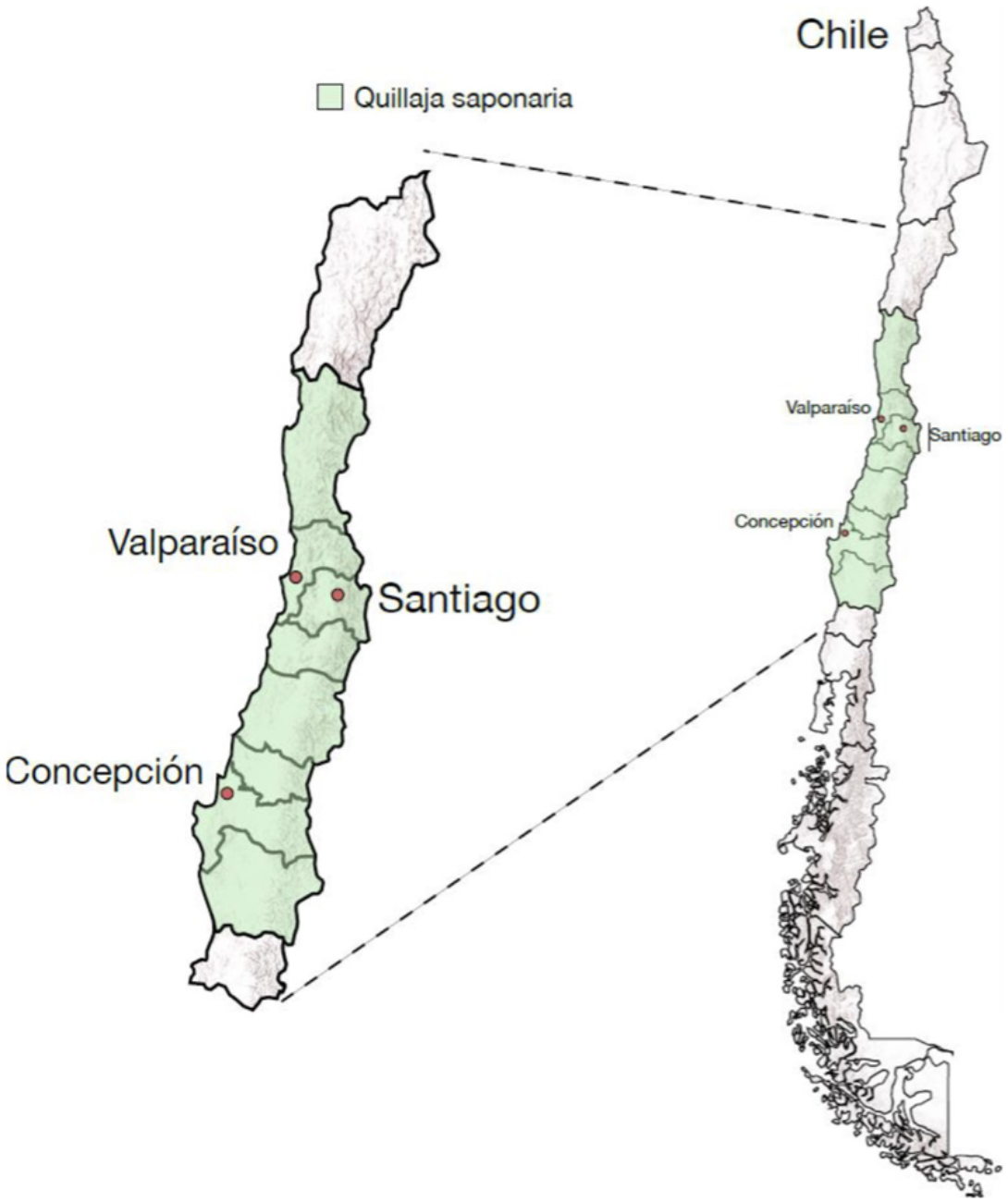
- The Quillaja saponaria tree, native to central Chile, has historically been valued for
its soap-like bark containing saponins, which produce foam and have traditional
cleaning uses. Its significance escalated in the late 20th and early 21st centuries
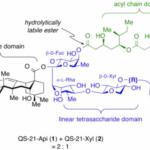
when scientists discovered that a major saponin component, QS-21, possesses
potent immunostimulant properties, making it a critical adjuvant in vaccine
formulations for diseases such as malaria, shingles, and respiratory viruses. This
breakthrough transformed the tree's commercial importance from mainly a source for
soap and shampoo to a key player in modern immunology. However, the reliance on
wild harvesting of its bark has raised sustainability concerns due to high demand
and limited cultivation efforts, prompting efforts to engineer biosynthesis of QS-21
through biotechnology and develop sustainable production methods. - Recent research has elucidated the complete biosynthetic pathway of QS-21, a
complex immunostimulatory saponin derived from Quillaja Saponaria. The pathway
has been successfully reconstituted in heterologous systems such as tobacco and
yeast, demonstrating the potential for sustainable, large-scale bioproduction of QS-
21 outside wild harvesting. Additionally, efforts to engineer the pathway aim to
produce other structurally similar saponins with enhanced immunostimulatory
efficacy and reduced toxicity. These advancements enable systematic exploration of
structure-activity relationships and open possibilities for designing next-generation
vaccine adjuvants, reducing reliance on wild tree bark and addressing supply
sustainability issues. - Limitations highlighted include the structural complexity of QS-21, which poses
challenges for selective chemical modification to optimize its immunostimulatory
activity and toxicity profile. Additionally, the heterologous expression systems, such
as yeast, currently yield low amounts of QS-21, necessitating further optimization to
achieve commercially viable production levels. There are also concerns about
residual toxicity and reactogenicity of QS-21, which complicate its development for
human use. - Comment from DK: While recent advances in elucidating the QS-21 biosynthetic
pathway and its reconstitution in heterologous systems represent important scientific
progress with long-term potential, current evidence indicates that these approaches
remain far from commercially viable due to low titers, complex downstream
processing, and significant scale-up challenges. In contrast, existing plant-based
production methods, particularly extraction from Quillaja saponaria bark, have
demonstrated robust industrial performance and continue to support current global
demand without evidence of supply limitation when managed under regulated
forestry practices. Moreover, emerging clonal plantation strategies offer a near-term
pathway to further improve scalability, consistency, and sustainability. Therefore,
while biotechnological production platforms may play an increasing role in the future, - Quillaja trees are likely to remain the primary and reliable source of QS-21 for the foreseeable future.
Click here to access the full scientific paper.
Recent Posts