

Steichen, J.M., et al. Vaccination elicits HIV broadly neutralizing antibodies in primates
Nature, 2026 Aug, 656(8128):723-733. PMID: 42380658
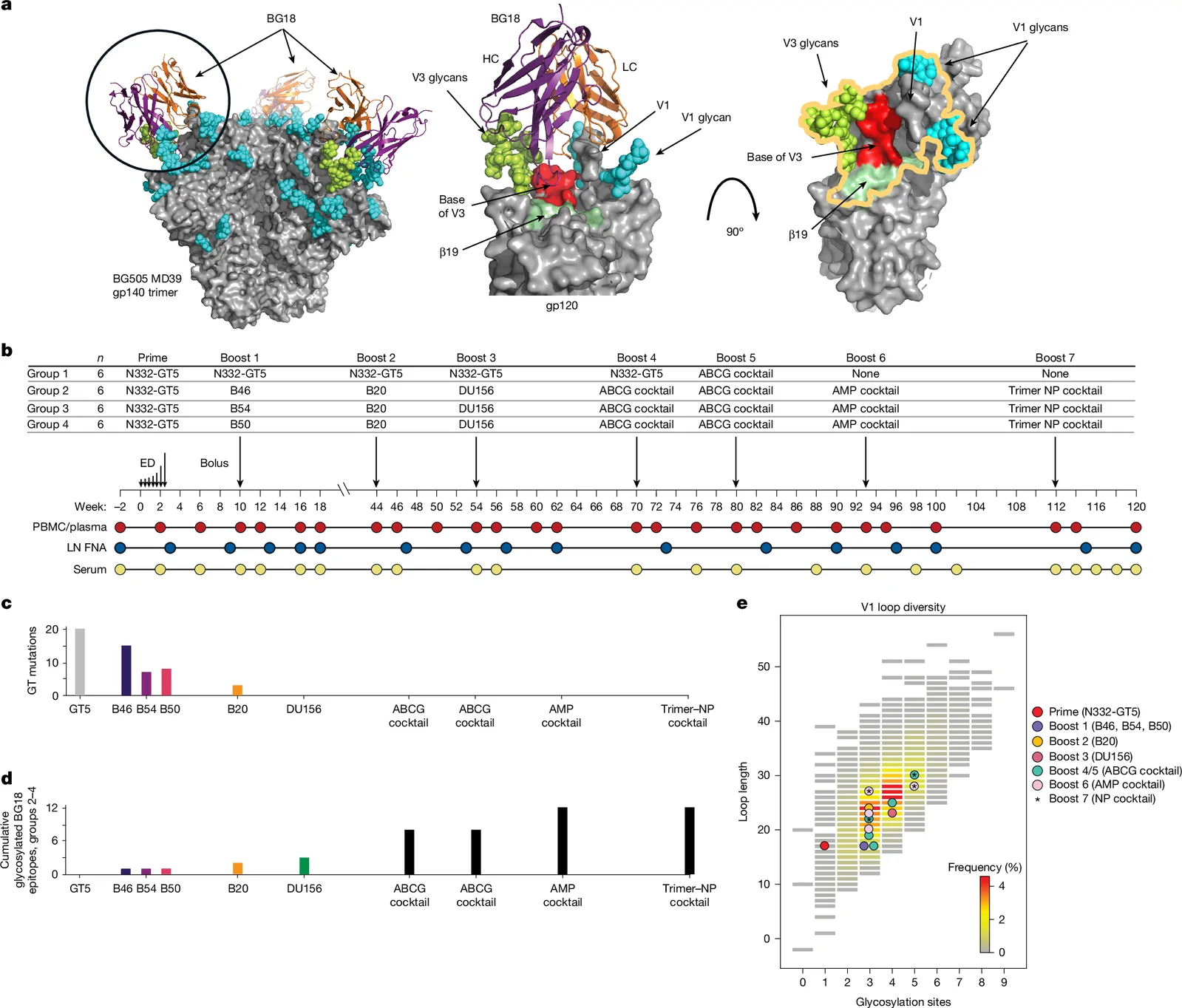
Building upon the design of germline-targeted Env immunogens that effectively prime V2 apex bnAb precursors (see previous paper from Marchitto et al), subsequent studies have demonstrated that sequential, lineage-based immunization strategies can further promote the maturation of these precursors into broadly neutralizing antibodies with high potency and breadth. Together, these complementary approaches underscore the critical importance of precise immunogen design and tailored immunization regimens in the pursuit of an effective HIV vaccine.
This paper demonstrates the successful induction of HIV broadly neutralizing antibodies (bnAbs) in non-human primates using a germline-targeting vaccine strategy combined with SMNP, highlighting the potential of saponin-based adjuvants in HIV vaccine development. The innovative approach involved sequential immunizations designed to activate rare bnAb precursor B cells and guide their maturation toward potent neutralizers, resulting in the generation of bnAb-class memory B cells and serum activity capable of neutralizing diverse HIV strains across significant breadth. This study is particularly interesting for those focused on saponin adjuvants because it underscores their role in enhancing the immunogenicity and durability of complex vaccine regimens, facilitating the precise elicitation of targeted antibody responses. The findings represent a significant advance in vaccine technology by demonstrating proof-of-concept that germline-targeting strategies, supported by adjuvants, can reliably induce prespecified bnAb responses in a physiologically relevant setting, moving closer to an effective HIV vaccine.
The germline-targeting, adjuvanted protein vaccine successfully elicited HIV broadly neutralizing antibodies (bnAbs) in outbred non-human primates, with at least 50% of animals developing bnAb lineages capable of neutralizing a broad panel of HIV isolates, reaching up to 67% neutralization breadth. The vaccine-induced bnAbs exhibited highly precise structural mimicry of human bnAb interactions with the HIV envelope, confirming the vaccine’s ability to guide antibody evolution toward desired specificities. Additionally, sera from 44% of vaccinated animals showed neutralizing activity at titers potentially protective against diverse HIV strains, and bnAb memory B cells persisted as a consequence of the immunization regimen, supporting the approach’s reproducibility and potential for further optimization.
Comment from DK: The study provides compelling evidence for the immunogenic potential of their vaccine strategies, but further research is needed to address durability, scalability, and real-world applicability.
Click here to access the full scientific paper.
[arrow_forms id=’3298′]