

Marchitto, L., et al. Enhanced B cell priming induces broadly neutralizing HIV-1 apex antibodies
Nature, 2026 Aug, 656(8128):712-722. PMID: 42380659
This Nature paper presents a significant advance in HIV vaccine design by demonstrating that germline-targeted Env immunogens can rapidly prime and induce broadly neutralizing V2 apex antibodies in macaques, including against challenging viruses with glycans at residue Asn130. The innovative aspect lies in the rationally designed immunogens, which include the optimized Env CAP256.OPT4 variant that markedly enhances B cell precursor activation using various delivery platforms (protein nanoparticles, mRNA, SHIV infection).
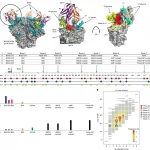
The immunization of macaques with the OPT4-S-sortase-A-conjugated nanoparticle (OPT4-S-scNP) mixed with SMNP adjuvant resulted in robust antibody responses characterized by several key findings. The vaccinated macaques developed high-titer plasma IgG binding to autologous and heterologous HIV-1 Env trimers over time, indicating strong and sustained humoral responses. Additionally, serum neutralization assays showed that these animals achieved high reciprocal ID50 titers against the immunogen, with some reaching titers above 1:10,000, demonstrating potent neutralizing activity. Electron Microscopy Polyvalent Epitope Mapping (EMPEM) revealed that the antibody responses targeted the V2 apex region of the Env, akin to broadly neutralizing antibodies in humans. Furthermore, the plasma from vaccinated macaques was capable of blocking the binding of known V2 apex broadly neutralizing antibodies (like PG9 and VRC26.25), confirming epitope specificity. The immunization also elicited diverse antibody responses with some degree of cross-reactivity, and the breadth of neutralization increased over time, suggesting that adjuvant-enhanced immunization with OPT4-S-scNP effectively primes durable and broad bnAb-like responses in macaques.
For researchers interested in saponin adjuvants, this work underscores the importance of immunogen design in effective HIV vaccine responses, as it signals that the quality of antigen presentation coupled with immune potentiators can drive rapid maturation of bnAbs. The findings are essential for informing human HIV vaccine strategies aimed at eliciting durable, broadly neutralizing antibodies, offering a molecular blueprint that may be combined with adjuvants to further enhance immunogenicity and protective efficacy against diverse HIV strains.
Click here to access the full scientific paper.
[arrow_forms id=’3298′]