Márquez, P.G., et al. Cooperative supramolecular integration of QS-21 into polymeric micelles as a tunable nanoadjuvant platform for subunit vaccines. RSC Adv. 2026 May 1, 16(25):22897-22915. PMID: 42080164
Home » News » Scientific Papers » Márquez, P.G., et al. Cooperative supramolecular integration of QS-21 into polymeric micelles as a tunable nanoadjuvant platform for subunit vaccines. RSC Adv. 2026 May 1, 16(25):22897-22915. PMID: 42080164
Márquez, P.G., et al. Cooperative supramolecular integration of QS-21 into polymeric micelles as a tunable nanoadjuvant platform for subunit vaccines. RSC Adv. 2026 May 1, 16(25):22897-22915. PMID: 42080164
Márquez, P.G., et al. Cooperative supramolecular integration of QS-21 into polymeric micelles as a tunable nanoadjuvant platform for subunit vaccines. RSC Adv. 2026 May 1, 16(25):22897-22915. PMID: 420801642026-06-182026-06-18https://desertking.com/wp-content/uploads/2023/04/dk-color.pngDesert Kinghttps://desertking.com/wp-content/uploads/2026/06/screenshot-2026-06-18-at-15.52.10.png200px200px
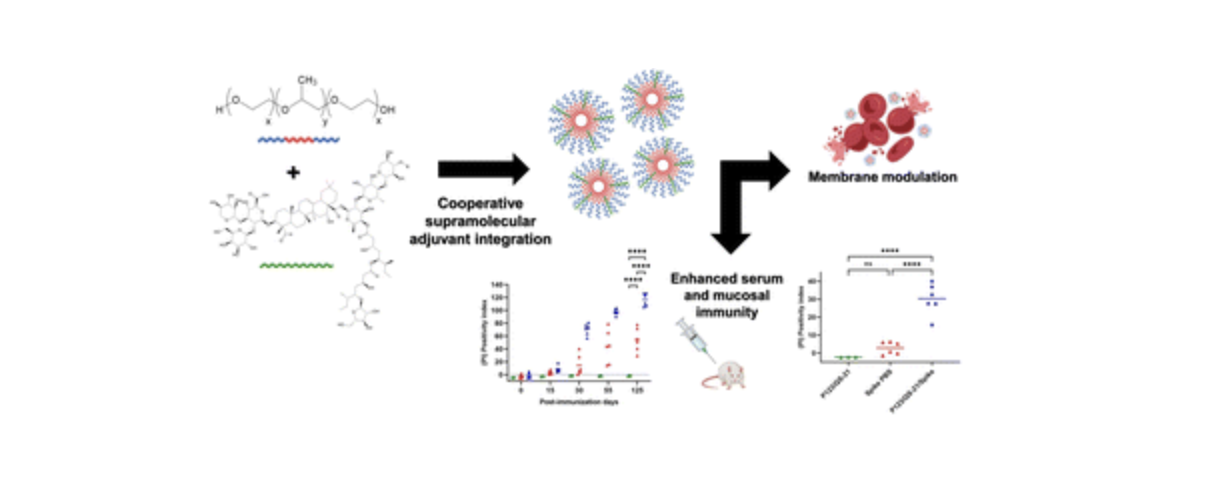
This paper is about another adjuvant formulation method with QS-21. This study presents a novel approach to improving the safety and efficacy of QS-21, a potent saponin adjuvant widely used in vaccine formulations, by utilizing cooperative supramolecular integration within amphiphilic PEO–PPO triblock copolymer micelles. Unlike traditional lipid-based systems, the authors demonstrate that QS-21 can participate in architecture-dependent self-assembly into nanoscale micelles, resulting in structures with enhanced dilution stability, controlled membrane activity, and significantly reduced hemolytic activity while preserving immunostimulatory function.
Their in vivo evaluation with a SARS-CoV-2 Spike antigen shows that this nanoadjuvant platform elicits strong systemic and mucosal antibody responses, including neutralizing activity, highlighting its potential for subunit vaccine development. The study highlighted that cooperative self-assembly of QS-21 with PEO–PPO triblock copolymers, particularly P123, results in nanoadjuvant systems with favorable physicochemical and biological properties. Specifically, the architecture-dependent organization modulates QS-21’s interfacial presentation, membrane activity, and in vivo immunogenicity, demonstrating that supramolecular design can enhance immunostimulatory efficacy while mitigating toxicity. The findings suggest that polymer architecture serves as a critical design parameter to optimize nanoadjuvants, providing a promising alternative to lipid-based systems like AS01.
Comment from DKI: This work is unique because it shifts the paradigm from lipid- centric adjuvant stabilization to a supramolecular assembly-based strategy, providing a scalable, tunable, and potentially safer platform for saponin-based
adjuvants with broad translational relevance. However, this work was conducted within a controlled, preclinical setting focusing on structure–function relationships within polymeric micelles. The scope did not include direct comparisons with
clinically established adjuvant platforms (e.g., AS01), and the sample sizes, particularly for adjuvant-only controls (n=3), limit statistical power. Additionally, the potential influence of formulation stability, long-term storage, and scalability was not extensively addressed.