

Poe, M., et al. Dissecting the mechanism of action of the adjuvant system AS01 in human immune cells: synergy of QS-21 and monophosphoryl lipid A and role of type I interferons. Front Immunol, 2026 Sep 24, 17:1916491. PMID: 42851384
This paper investigates the mechanism of action of the adjuvant system AS01, which is composed of the saponin QS-21 and the TLR4 agonist monophosphoryl lipid A (MPLA), formulated in liposomes. It dissects the synergistic contributions of QS-21 and MPLA to immune cell activation, with a focus on human immune cells, which has been less explored than preclinical mouse models.
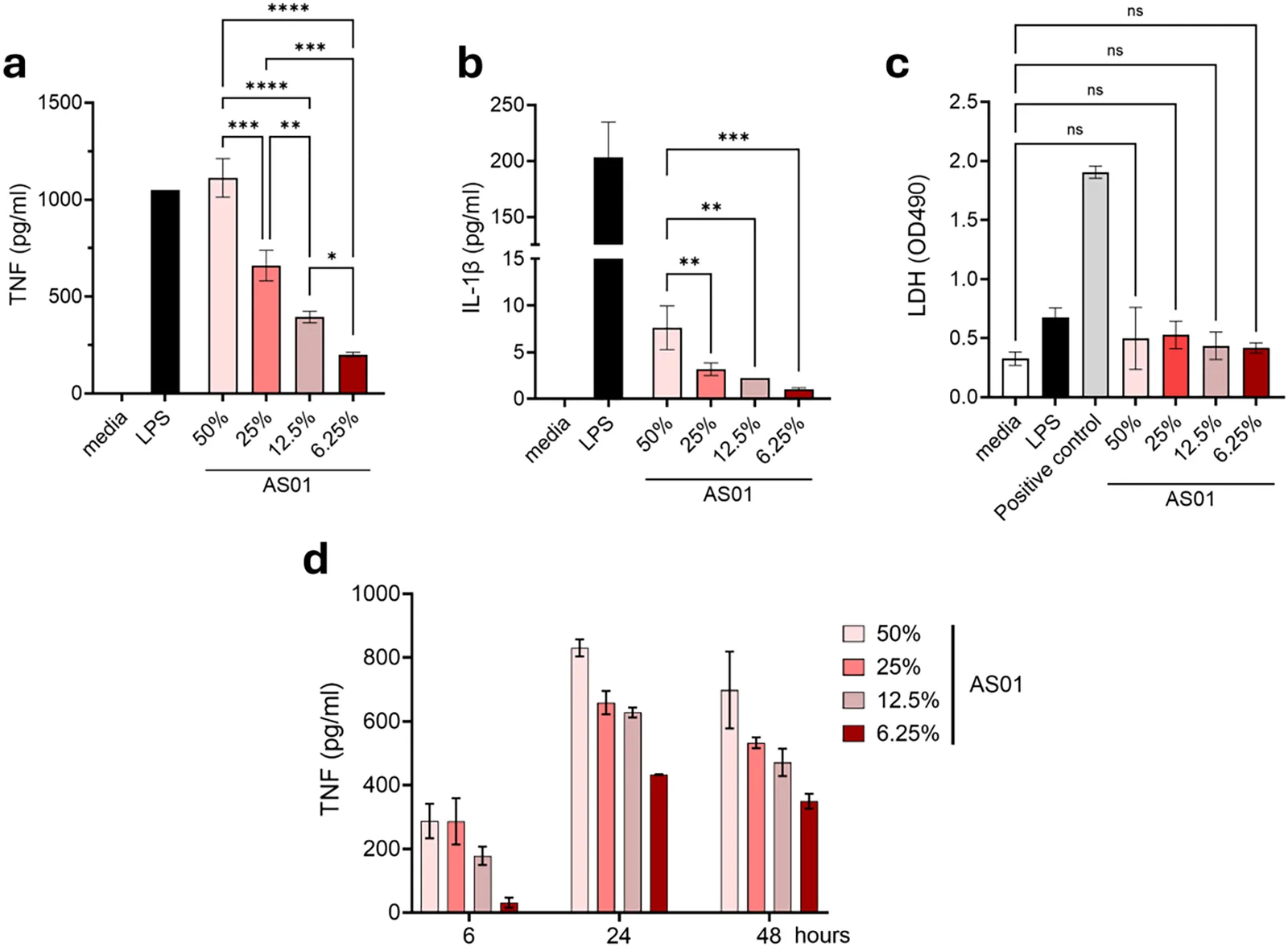
The novelty lies in demonstrating that AS01 induces a robust chemokine response and a type I interferon (IFN)-associated transcriptional signature in human THP-1 cells and peripheral blood mononuclear cells (PBMCs), an effect not extensively reported in preclinical studies for MPLA. Furthermore, the study highlights that the increased expression of CD83 on THP-1 cells, a marker associated with dendritic cell maturation, is largely driven by QS-21, suggesting a specific role for the saponin component in this aspect of immune activation. This work is very relevant given the widespread use of AS01 in recombinant vaccines for conditions like shingles, respiratory syncytial virus, and malaria, where its strong immunostimulatory effect is crucial.
By clarifying the individual and combined mechanisms of QS-21 and MPLA in human cells, the paper provides novel insights into how AS01 stimulates human immunity, addressing the known species-specific differences in TLR4 signaling and offering potential biomarkers like CD83 for adjuvant activity. This understanding is critical for the rational design and improvement of future saponin-containing adjuvant systems. However, the primary stated limitation is the need for human-specific studies due to differences between human and mouse immune systems, particularly in TLR4 engagement by MPLA and IFN-γ production. The study itself is presented as a step towards better understanding AS01’s effects in humans.
Click here to access the full scientific paper.
[arrow_forms id=’3298′]