

Bülow, F.E., et al. A novel thin layer chromatography based method for the quantification of quillaic acid saponins. J Pharm Biomed Anal, 2026 Jun 15, 273:117409. PMID: 41687224
This study introduces a novel, cost-effective TLC-based method for quantifying quillaic acid, the core aglycone of important saponin adjuvants like QS-21, which are widely used to enhance vaccine efficacy. Unlike traditional high-cost techniques such as HPLC-MS, this method employs derivatization with a fluorescent reagent (NBD-H), allowing sensitive and selective detection of sapogenins after acid hydrolysis of plant extracts. Its simplicity, affordability, and validation against HPLC make it particularly valuable for resource-limited laboratories aiming to monitor and ensure the quality of plant-derived saponin adjuvants. This work is unique because it broadens the analytical toolkit for phytochemical and pharmaceutical researchers focused on saponins, facilitating easier screening and quality control of adjuvant-producing plants, thereby supporting vaccine development and standardization efforts.
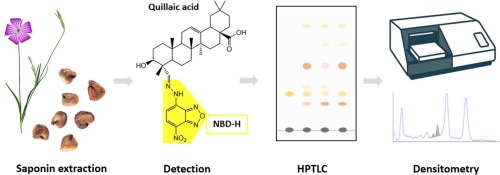
The technique involves extracting saponins from plant material, hydrolyzing them with acid to release quillaic acid (QA), and then derivatizing the QA with the fluorescent reagent NBD-H to form a hydrazone. The resulting compounds are separated by thin-layer chromatography (TLC), and their fluorescence is quantified using densitometry at 480 nm. This method enables sensitive, selective, and cost-effective quantification of QA in plant extracts, suitable for laboratories with limited resources.
Click here to access the full scientific paper.