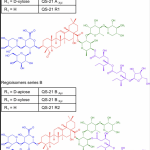


Gotham, D., et al. Understanding adjuvant supply chains for new TB and malaria vaccines. Vaccine, 2026 Apr 22, 82:128609. PMID: 42025104
This paper provides a comprehensive analysis of the global supply chain for
Quillaja-derived saponin adjuvants, notably QS-21, which are pivotal components in
several recent and upcoming vaccines for tuberculosis, malaria, COVID-19, and
other diseases. It uniquely emphasizes the natural limitations of sourcing from
Chilean Quillaja trees, highlighting the risks posed by climate change, monopoly
adjuvant manufacturing, and geopolitical factors that could threaten supply stability
as demand for these adjuvants increases. The paper underscores the critical need
for diversification of supply sources and innovation in synthetic or semi-synthetic
production methods to prevent bottlenecks, ensuring equitable and timely access to
life-saving vaccines. Its background is rooted in the high scientific, regulatory, and
economic barriers associated with adjuvant development, making its call for
democratization and open access approaches especially pertinent for stakeholders
seeking sustainable, scalable vaccine solutions.
The authors estimate the current and projected demand for Quillaja saponins as
approximately 1.7–2.8 kg per year, of purified Quillaja saponins (QS-21) used in
vaccine manufacturing, with future demand projected to increase to 3.1–11.5 kg/year
(mainly driven by vaccines for TB, malaria, COVID-19, shingles, and respiratory
syncytial virus (RSV)). The authors also estimate the supply capacity as 10 kg/year,
which is over three times the amount currently used. This capacity could meet
projected demand in the medium term but leaves a narrow safety margin. Scaling up
would depend on developments such as plantations, plant tissue cultures, semi-
synthesis, or chemical synthesis.
The conclusion of the paper emphasizes that while current Quillaja saponin supply
appears sufficient to meet medium-term vaccine demands, the supply chain's
dependence on a limited natural resource and adjuvant monopoly poses significant
risks. To safeguard against potential bottlenecks and ensure equitable access to
adjuvants, it is critical to diversify supply sources, invest in synthetic or alternative
production methods, and foster open, transparent markets. Implementing policies
and initiatives that promote the development of adjuvants as global public goods.
Open access resources, patent sharing, and technology transfer can help
democratize access, accelerate vaccine development, and enhance global health
security.
Comments from DK. We encourage you to read our currently published paper
summarized above: Padilla, L. et al. The challenge of one billion adjuvanted vaccine
doses: evaluating scalability, sustainability, and supply capacity of Quillaja saponin
QS-21 for large-scale vaccine demand. Front Immunol, 2026 Apr 17, 17:1813847.
PMID: 42079571
Click here to access the full scientific paper.