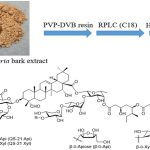


Talukdar, P., et al. From bark to bench: innovations in QS-21 adjuvant characterization and manufacturing. Front Immunol, 2025 Dec 2, 16:1677995. PMID: 41409277
This paper provides an overview of QS-21, a potent saponin-based adjuvant derived from the bark of Quillaja saponaria, highlighting its significant role in enhancing both humoral and cellular immune responses in vaccines. Despite its efficacy, QS-21 faces challenges such as hydrolytic instability, limited natural availability, structural heterogeneity, and toxicity, which constrain its broader application. The goal of the review is to explore innovative strategies, including structural modifications, formulation in nanoparticle systems, and advances in synthetic biology, to optimize QS-21’s stability, safety, and scalable production. Emphasizing the importance of integrating emerging technologies, the paper underscores how these advancements can accelerate vaccine development, improve manufacturing sustainability, and broaden the utility of QS-21 in next-generation immunizations against infectious diseases and cancers.
The document is a review article rather than a presentation of original experimental results. It synthesizes current knowledge on QS-21, discusses challenges, and explores emerging technological strategies, such as synthetic biology and artificial intelligence, to improve adjuvant characterization, delivery, and production. While it include some data or illustrative examples from existing studies, its primary purpose is to review and propose future directions rather than report new experimental findings.
The conclusion of the paper emphasizes that QS-21 is a potent adjuvant with significant immunostimulatory potential. The authors highlight that leveraging emerging disruptive technologies, such as synthetic biology and artificial intelligence, can accelerate the development of safer, more sustainable, and tailored adjuvants. They advocate for an integrated, platform-based approach to adjuvant discovery, characterization, and manufacturing that can transform vaccine and immunotherapy development, ultimately enabling rapid, scalable, and cost-effective production of next-generation adjuvants with improved efficacy and safety profiles.
While the authors rightly identify QS-21 as a potent immunostimulatory adjuvant with valuable applications in licensed vaccines, it is overly optimistic to suggest that emerging technologies such as synthetic biology and artificial intelligence will imminently transform adjuvant discovery, characterization, and manufacturing in the short term. Although proof-of-concept biosynthesis of QS-21 in engineered yeast has been reported, production yields remain low, and industrial-scale manufacturing is unproven and likely years away; alternative approaches such as plant cell culture or microbial engineering are still at an early developmental stage and are not yet cost-competitive. In contrast, current industrial procurement of QS-21 from natural Quillaja saponaria sources has proven efficient and reliable for existing vaccine supply, without market shortages. Consequently, broad deployment of disruptive technologies in adjuvant manufacturing will require substantial time and capital investment beyond what the authors’ conclusion implies.
Click here to access the full scientific paper.