

Shrivastava, S., et al. ALFQ adjuvanted HIV-1 envelope protein vaccination elicits durable functional antibody and cellular responses in nonhuman primates. NPJ Vaccines, 2025 Dec 19, PMID: 41419739
The development of an effective HIV-1 vaccine remains a global health priority due to the persistent high prevalence of HIV/AIDS despite advances in treatment and prevention strategies. While previous vaccine efforts have achieved limited success, understanding how to elicit durable and broadly protective immune responses, particularly potent neutralizing antibodies and cellular immunity, is critical. The goal of this study is to evaluate the immunogenicity and safety of various adjuvant formulations, particularly the ALFQ and ALFQA liposomal adjuvants containing QS-21 saponin, in enhancing immune responses to HIV-1 envelope proteins in nonhuman primates. This research is significant because it seeks to identify adjuvants that can potentiate long-lasting, functional antibody and T-cell responses, which are essential for effective vaccine-induced protection against HIV, thereby informing the development of more efficacious vaccine formulations.
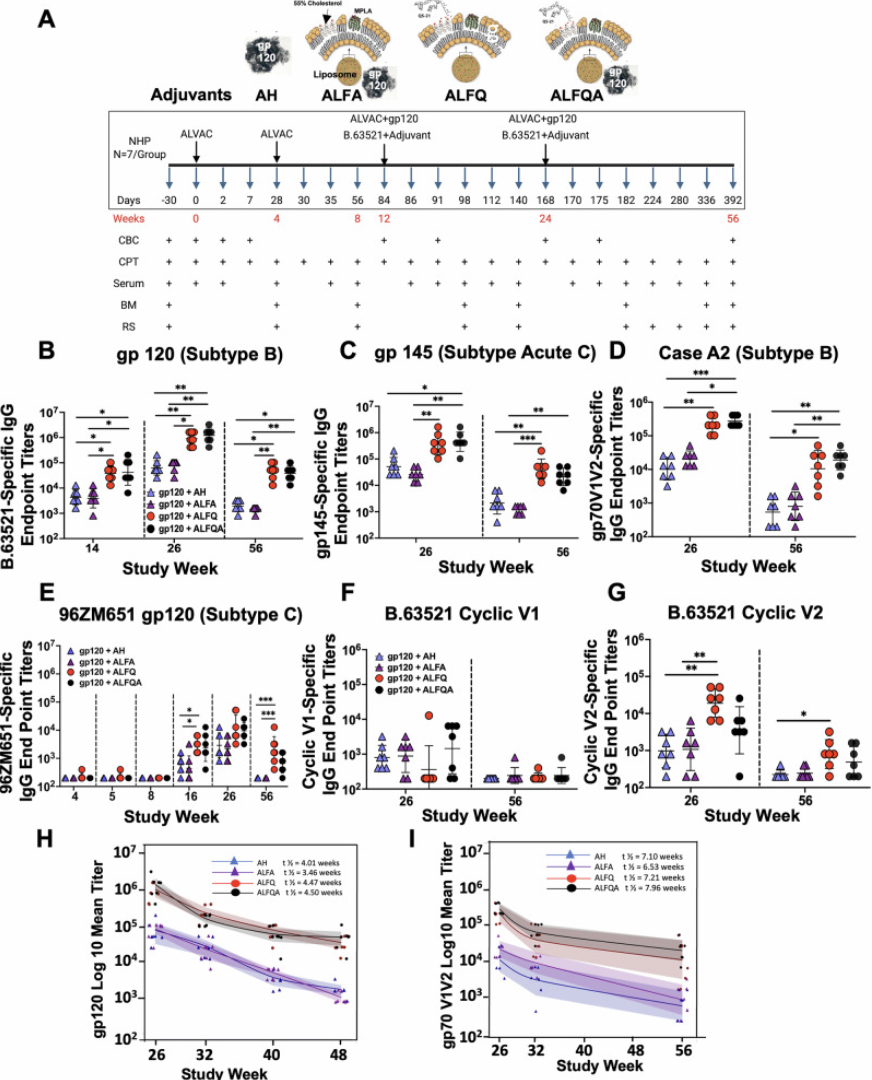
The study demonstrated that the ALFQ and ALFQA adjuvant formulations elicited the most potent and durable immune responses in nonhuman primates, outperforming traditional adjuvants such as aluminum hydroxide (AH). Specifically, these formulations induced high-magnitude binding antibody responses with increased avidity, long-lasting antigen-specific plasma cells in the bone marrow, and enhanced neutralizing and Fc-mediated effector functions, including ADCC, ADCP, and complement activation. Additionally, ALFQ and ALFQA promoted robust polyfunctional CD4+ and CD8+ T-cell responses, including IL-21-secreting Tfh cells and persistent antigen-specific memory T cells. Transcriptomic analyses further revealed the upregulation of innate antiviral and immune pathways associated with the potent adjuvant effect, highlighting the enhanced immunogenicity conferred by QS-21-containing formulations. These findings suggest that ALFQ and ALFQA are highly effective adjuvants capable of inducing durable, multi-functional immunity critical for advancing HIV vaccine development.
The paper concludes that QS-21 plays a significant role in enhancing the immunogenicity of the vaccine formulations. Specifically, the addition of QS-21 to liposomal adjuvants (as in ALFQ and ALFQA) substantially improved humoral and cellular immune responses, including higher antibody titers, greater durability of responses, and more robust CD8+ T cell responses compared to formulations without QS-21 (such as AH and ALFA). Transcriptomic analyses also revealed upregulation of antiviral and innate immune pathways associated with QS-21-containing formulations, emphasizing QS-21’s role in potentiating innate and adaptive immune pathways. The study concludes that QS-21-containing liposomal adjuvants are highly potent and could significantly contribute to the development of a more effective HIV-1 vaccine by promoting strong cell-mediated and humoral immunity, with a particular emphasis on the activation of antiviral innate immune responses and CD8+ T cell responses
The authors acknowledge several limitations and outline potential next steps for further research. Limitations include the use of gp120 protein instead of native-like trimers, the absence of lymph node sampling, the absence of efficacy data, and limited functional outcomes. Next steps suggested by the authors include: transition to efficacy studies, exploring mechanisms of immune activation, and clinical translation.
Click here to access the full scientific paper.